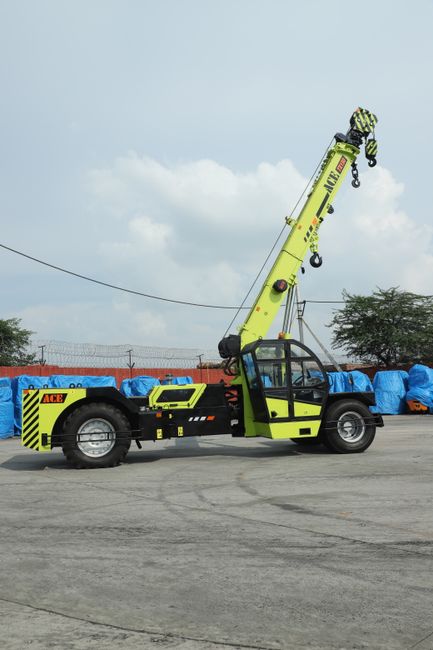
Crane-Assisted Removals: When It's Necessary and Safe
Sometimes a normal removal van, a carry up three flights of stairs, and a very determined team simply are not the right answer. If a sofa will not fit through a stairwell, a piano is too awkward for the internal route, or a top-floor flat has no workable lift access, crane-assisted removals can turn a stressful day into a controlled one. The trick is knowing when it is genuinely necessary, and just as importantly, when it is safe. That is where good planning, the right lifting equipment, and an experienced moving team make all the difference.
This guide breaks down how crane-assisted removals work, what they are best used for, the main risks to watch out for, and the checks that should happen before anything is lifted. If you are comparing moving options, you may also find it helpful to look at services like man with van removals for smaller jobs or home moves when the access is straightforward. For larger moves, removal truck hire can be the better fit. Different jobs, different tools. Simple enough, really, though the details matter more than people expect.
Table of Contents
- Why Crane-Assisted Removals Matter
- How Crane-Assisted Removals Work
- Key Benefits and Practical Advantages
- Who This Is For and When It Makes Sense
- Step-by-Step Guidance
- Expert Tips for Better Results
- Common Mistakes to Avoid
- Tools, Resources and Recommendations
- Law, Compliance, Standards, or Best Practice
- Options, Methods, or Comparison Table
- Case Study or Real-World Example
- Practical Checklist
- Conclusion
- Frequently Asked Questions
Why Crane-Assisted Removals: When It's Necessary and Safe Matters
Crane-assisted removals matter because access problems are rarely just "inconvenient". They can create real safety issues. A bulky item carried through a tight stairwell can damage walls, railings, and the item itself. Worse, it can put movers and residents at risk of strains, slips, finger traps, and the kind of awkward wobble that makes everyone go quiet for a second. You know the moment.
There is also a wider practical point. When access is poor, a move can become slower, more expensive, and more disruptive if the wrong method is chosen. A carefully planned lift can reduce time on site, lower the chance of internal damage, and avoid repeated attempts to move an item through a route that was never going to work. That said, a crane is not a magic wand. It is a specialist solution for specialist situations.
In our experience, the best crane-assisted removals are the ones where the decision is made early. Not on the kerb with the item halfway out of a window. Early decisions allow proper assessment, parking checks, lift planning, and sensible coordination with neighbours or building management. That calm preparation is what turns a difficult lift into a safe, repeatable process.
Expert summary: Crane-assisted removals should be used because they are the safest practical option for a specific access problem, not because they sound impressive. The safest removal is usually the one that has been planned before the first strap is clipped on.
How Crane-Assisted Removals: When It's Necessary and Safe Works
A crane-assisted removal lifts items from one point to another using a crane, lifting hoist, or similar specialist equipment. The item is secured, balanced, and moved along a controlled lifting path, usually from a window, balcony, terrace, or another prepared opening. The receiving point is then managed so the item can be brought inside safely. It sounds dramatic, but in practice it is a sequence of measured steps.
The process usually begins with a site survey or at least a detailed access check. A mover will look at the weight, dimensions, fragility, and shape of the item, plus the surrounding environment: street width, overhead obstacles, building frontage, balcony strength, windows, traffic flow, and where the equipment can actually be set up. This bit matters more than people think. A lift is only as safe as the space around it.
The team then decides whether the lift is suitable. Some items are straightforward enough with the right preparation: large wardrobes, American-style fridge freezers, specialist furniture, or oversized commercial equipment. Other items may be too fragile, unstable, or awkwardly shaped without added support. If the route is poor, the landing point unsafe, or the item unsuitable for lifting, a different method should be chosen. No honest operator will pretend otherwise.
On the day, the area is usually secured, the load is protected with padding and straps, and the lifting path is kept clear. The crew coordinates the handover between the lower and upper points. A spotter may guide the item so it does not swing or catch on masonry, glass, or balconies. Good communication is everything here. Short instructions. Clear signals. No shouting over each other while trying to work at height. That is how trouble starts.
If you are dealing with a business move, the same principles apply, just on a different scale. Items from a fit-out, archive room, or office floor may need special handling, especially where ordinary access is tight. For those moves, office relocation services and commercial moves can help coordinate heavier or more complex logistics. For a more general overview of the moving process, the company's about us page is also useful for understanding how they approach different kinds of removals.
Key Benefits and Practical Advantages
The main benefit is simple: crane-assisted removals can make the impossible route possible. But the real value is a bit broader than that.
- Reduced risk of internal damage: Narrow hallways, painted corners, banisters, and shared stairwells take a beating when oversized items are forced through them.
- Safer handling for heavy or awkward items: The right lift can reduce manual strain and make handling more controlled.
- Less disruption inside the property: Fewer walls scraped, fewer doors removed, fewer awkward turns.
- Better for difficult buildings: High-rise flats, converted houses, mews properties, and buildings with tight access often benefit most.
- Time efficiency on the day: A planned lift can sometimes be quicker than a long internal carry, especially where stair access is poor.
There is another practical advantage that gets overlooked: peace of mind. People often worry about a lift before they have even confirmed whether it is needed. Once a proper assessment is done, the uncertainty usually drops away. Even if the answer is "no, a crane is not necessary", that is still valuable. It stops guesswork.
For some households, the better solution is a combined approach. A smaller vehicle for general contents, plus specialist support for one or two difficult items. Services such as man and van can suit lighter moves, while house removalists may be better for a full property relocation. The point is to match the method to the access, not the other way round.
Who This Is For and When It Makes Sense
Crane-assisted removals make sense when access is the real problem. Not the volume of the move, not the packing, not the distance. Access.
Typical situations include:
- top-floor flats with very narrow staircases
- properties where lift dimensions make internal carrying impossible
- large furniture that cannot turn corners safely
- balcony or window lifts for oversized items
- commercial premises moving specialist equipment
- period properties where staircases are fragile or unusually tight
- homes where flooring, walls, or bannisters are vulnerable and must be protected
It can also be sensible for one-off furniture pick-ups where the item is too large for a normal route. In those cases, a carefully managed lift may be less disruptive than dismantling the item beyond repair. If you are only collecting a single bulky item, furniture pick-up services are worth considering, especially when the access is awkward but the item is still worth saving.
To be fair, not every difficult move needs a crane. Sometimes the best answer is a well-planned manual carry, a different time slot, or extra packing and padding. But if an item has already been measured and you can see the problem on paper, the signs are usually there. The doorway is too tight. The staircase turns too sharply. The lift is too small. The balcony is the only realistic opening. That is when a specialist lifting solution starts to look less optional and more sensible.
And if you are not sure? Ask before the move, not during it. That's the bit people sometimes leave too late.
Step-by-Step Guidance
Here is the practical version. No fluff, just the sequence that keeps things safer and smoother.
- Measure the item properly. Length, width, height, and any protruding handles, feet, or fragile sections. Don't guess. The extra centimetre is often the difference between "fine" and "absolutely not".
- Check the access route. Include stairs, lifts, doors, corridors, external space, parking, and overhead obstacles. A route can look fine at a glance and still fail once someone carries a sofa to the landing.
- Assess the lifting point. Windows, balconies, terraces, and roof-edge positions all have different limits. The opening must be suitable and safe for the equipment being used.
- Confirm building permissions where needed. Flats, managed blocks, and commercial premises may require advance notice or coordination with managers, concierge teams, or neighbours.
- Choose the right protection. Padding, corner guards, straps, floor covers, and wrapping all help reduce damage. This is especially important for polished furniture and glazing.
- Plan the lift sequence. Decide who is on the lower point, who is guiding above, and who is controlling the load during movement.
- Secure the site. Keep bystanders away, control the pavement area if needed, and make sure the route is not being used by pedestrians or parked vehicles.
- Lift only when conditions are suitable. Wind, rain, poor visibility, and unstable ground can change the safety picture quickly.
- Land and re-check. Once the item is in position, inspect it for damage and confirm the route inside is clear before moving it further.
The order may vary a little depending on the job, but the principle does not change: measure first, plan second, lift last. That sounds obvious. Yet a surprising number of problems happen because somebody skipped straight to the last bit.
Expert Tips for Better Results
A good lift is rarely about the crane alone. It is about the small details that make the lift boring. And boring, in this context, is excellent.
Tip 1: Photograph the access points before moving day. A few clear pictures of the front elevation, windows, balconies, and street position can save a lot of back-and-forth. It also helps the mover spot likely issues early.
Tip 2: Keep the item as lightweight as possible. Remove drawers, shelves, detachable tops, loose glass, and anything else that adds movement or imbalance. A wardrobe packed with books is not doing you any favours. Truth be told, furniture is often heavier when it is stubborn.
Tip 3: Protect the route even if the lift is external. The item still has to enter and leave the building. Hallways, thresholds, and floor edges are still vulnerable.
Tip 4: Book a realistic time slot. Early mornings are often calmer for traffic and street access. On busy roads, that can make a noticeable difference.
Tip 5: Be honest about fragility. If the item is antique, laminated, glass-fronted, or already unstable, say so. A few extra minutes of prep can save a lot of regret.
Tip 6: Ask about insurance and safety procedures. A responsible provider should be able to explain how items are protected, what their process is, and how they handle unexpected issues. You can review the company's own approach in its insurance and safety information and health and safety policy.
A small human note here: the quietest jobs are often the best jobs. No drama, no improvising, just a crew that knows exactly what it is doing while the kettle boils inside and the street looks a bit half-finished outside. That calm is worth paying attention to.
Common Mistakes to Avoid
Most problems with crane-assisted removals come from planning gaps, not from the equipment itself. Here are the mistakes that cause the most grief.
- Assuming a crane is automatically safer for everything. It is safer only when the item, access, and setup are suitable.
- Underestimating weight and balance. A bulky item may seem manageable until it starts to tilt in the air.
- Forgetting about street access. A perfect lift plan means very little if the vehicle cannot park legally or safely.
- Not measuring the receiving point. Getting the item out is only half the job. Getting it in matters just as much.
- Leaving it too late to arrange permissions. This one is common with flats and shared buildings. Permissions, notice, and access windows can take time.
- Skipping protection on walls and floors. One scratched hallway can spoil the whole experience.
- Trying to save money by removing the wrong way. A cheap option that causes damage is not cheap at all. Let's face it, that lesson is usually learned the hard way.
There is also a softer mistake: not asking enough questions. If you are unsure whether a lift is appropriate, ask how the crew will assess it. Ask what happens if wind conditions change. Ask how they will protect the property. Good providers welcome those questions. They are not annoying. They are sensible.
Tools, Resources and Recommendations
For a safe and well-organised crane-assisted move, a few tools and planning resources make life easier:
- tape measure or laser measure for accurate dimensions
- camera phone for access photos
- protective wrapping and blankets for furniture and finishes
- floor covers and corner guards for hallways and thresholds
- basic inventory list so nothing gets overlooked during the lift
- building contact details if permission or access coordination is required
If you are still choosing the wider removal method, it can help to compare it against a standard vehicle-based move. A larger vehicle may solve the transport part, but not the access part. That is why options like moving truck or removal truck hire are useful for some moves and less useful for others. The right answer depends on where the item starts, where it is going, and how it gets through the middle.
For customers who want packing support before the lift, packing and unpacking services can be a smart add-on. Better packing means fewer loose parts, better balance, and less faffing around on the day.
Law, Compliance, Standards, or Best Practice
With crane-assisted removals, the safest approach is to follow recognised lifting best practice and the site-specific safety expectations that apply to the property and road space. In the UK, that usually means careful risk assessment, competent operators, appropriate equipment, and clear control of the working area. Exact legal duties can vary depending on the job, the site, and the equipment involved, so it is wise to treat each move individually rather than assume one process fits every situation.
Good practice typically includes:
- checking that the lifting method is suitable for the item and location
- making sure the working area is clear and controlled
- using trained staff for rigging, guiding, and load handling
- protecting people below the lift path
- stopping the work if conditions become unsafe
- recording important site details before the lift starts
On managed sites, there may also be building rules, parking restrictions, or access requirements that need to be respected. For residential or commercial customers, it is usually best to coordinate in advance rather than leave those checks until moving day. The paperwork may not be glamorous, but it can prevent a lot of hassle.
If you are comparing providers, it is reasonable to ask how they approach safety, insurance, scheduling, and payment arrangements. A company that has clear payment and security information and transparent pricing and quotes practices is usually easier to work with from the start.
Options, Methods, or Comparison Table
Not every difficult move needs lifting equipment. Here is a simple comparison to help you think through the options.
| Method | Best for | Strengths | Limitations |
|---|---|---|---|
| Manual carry through internal access | Items that fit safely through stairs and doors | Simple, low setup, often cost-effective | Risky for oversized items or fragile interiors |
| Van or truck-based move | Standard home and office removals | Flexible, familiar, efficient for many jobs | Does not solve access problems on its own |
| Crane-assisted removal | Bulky items, awkward access, top-floor lifts | Can bypass impossible routes, reduces internal damage | Needs planning, suitable space, and specialist coordination |
| Furniture dismantling and reassembly | Large furniture that can be safely taken apart | Often avoids the need for lifting | Not suitable for every item, and some materials do not reassemble cleanly |
In practice, the best solution is often the least complicated one that still keeps people and property safe. If a sofa can be dismantled, great. If not, and the stairwell is a hard no, a crane may be the sensible route. A straightforward answer is nice, but the real world rarely obliges.
Case Study or Real-World Example
Consider a top-floor apartment in a converted Victorian building. The item in question is a heavy wardrobe with a mirrored front and no easy way to split it down. The internal staircase is narrow, turns sharply on the landing, and has a delicate banister that has already seen better days. The lift in the building is too small for the item, even if it were tilted. After measuring the wardrobe and checking the access, the team decides that a crane-assisted lift from the rear elevation is the safest option.
Before moving day, photos are taken, the external access point is confirmed, and the upper room is cleared. The wardrobe is wrapped, loose doors are secured, and the path inside the property is protected. On arrival, the crew checks the setup again. The lift is controlled, steady, and unhurried. The item is brought in without scraping the staircase or forcing the banister into a fight it would lose.
The useful part of this example is not that the lift was dramatic. It is that it avoided a messy internal carry that would likely have damaged the building and the wardrobe. The team did not invent a heroic solution on the day. They simply chose the right method early enough to make it calm. That is usually the whole game.
Practical Checklist
Use this checklist if you are considering a crane-assisted move:
- Measure the item accurately, including protrusions and fragile parts.
- Check whether the item can be dismantled safely first.
- Inspect staircases, lifts, doorways, and corridor widths.
- Confirm the external lifting point is suitable.
- Check whether parking or street access needs advance planning.
- Tell the mover about weight, fragility, and unusual shapes.
- Ask how the item will be protected during the lift.
- Make sure the building team or neighbours are informed if needed.
- Keep the lift path clear of people, pets, and obstacles.
- Review insurance, safety, and payment details before booking.
If you want a company overview before booking, you can read more about the team's standards on the insurance and safety page and its approach to responsible operations in the recycling and sustainability section. Those details can be surprisingly reassuring when you are comparing providers.
A small but important tip: keep your keys, phone, and any final instructions with you, not buried in a packed box. Moving day has a habit of making obvious things disappear.
Get a free quote today and see how much you can save.
Conclusion
Crane-assisted removals are not the first option for every move, and they should never be used casually. But when access is genuinely blocked, when internal carrying would create unnecessary risk, or when a bulky item needs a controlled lift, they can be the safest and smartest solution available. The real value lies in making a hard move feel manageable.
What matters most is judgement. Measure carefully. Ask early. Choose the method that protects people, property, and the item itself. If the plan is sound, a difficult removal can feel surprisingly orderly. And when the last strap comes off and the item is safely inside, you will usually feel the same thing people always do after a well-run move: relief, a bit of pride, and maybe the faint smell of fresh packing tape in the air. Not bad for a day's work.
Frequently Asked Questions
What is a crane-assisted removal?
It is a moving method that uses lifting equipment to move large or awkward items through an external opening such as a window, balcony, or terrace when internal access is unsuitable.
When do I actually need a crane-assisted move?
You usually need one when the item cannot safely fit through stairs, lifts, or corridors, or when trying to force it inside would create a real risk of damage or injury.
Is crane lifting safe for furniture?
Yes, it can be safe when the item is suitable, properly secured, and handled by trained movers using the right equipment and a clear lift plan.
Can every bulky item be lifted by crane?
No. Some items are too fragile, unstable, or awkwardly balanced. Others may need dismantling or a different removal method altogether.
How do I know if my building can support a crane-assisted lift?
The best way is to arrange an access check. A mover will look at the front elevation, access point, street position, and surrounding obstacles before confirming suitability.
Do I need permission from my building or landlord?
Sometimes, yes. Managed buildings, flats, and commercial premises may have access rules, notice requirements, or parking conditions that need to be handled in advance.
Will crane-assisted removals damage my property?
They should not, if the lift is properly planned and protected. Good crews use padding, floor protection, and controlled handling to reduce the risk of marks or impact damage.
Are crane-assisted removals more expensive?
They can be, because they require specialist equipment and additional planning. The final cost depends on access, item size, timing, and the complexity of the lift.
Can a crane be used for office relocations too?
Yes. Offices sometimes need lifts for heavy desks, specialist equipment, archive cabinets, or other items that are awkward to move through standard routes.
What should I do before the movers arrive?
Measure the item, clear the route, remove loose parts, take photos of access points, and make sure any permissions or parking arrangements are in place.
What happens if the weather is poor on the day?
Weather can affect safety, especially wind and visibility. A responsible team will assess conditions and may delay or reschedule if the lift cannot be carried out safely.
Can I just use a man and van service instead?
Sometimes, yes, especially for smaller or simpler moves. But if access is the real problem, a standard vehicle-based move may not solve it. In those cases, crane assistance or another specialist approach may be more practical.