Smart packing guide for fragile items before UK removals
Fragile items have a knack for turning a moving day into a tense little drama. One wobble in the van, one box packed in a rush, and suddenly you are listening for the sound nobody wants to hear: that dull, sickening clink. This smart packing guide for fragile items before UK removals is here to stop that. It shows you how to pack breakables properly, what materials actually help, and where people most often go wrong. Whether you are moving a few treasured glasses or a whole kitchen of delicate pieces, the aim is simple: less stress, fewer losses, and a calmer unpacking day.
To be fair, fragile packing is not just about wrapping things in more paper. It is about planning, grouping, cushioning, labelling, and thinking ahead about how boxes will be lifted and loaded. That matters even more in UK removals, where stairs can be narrow, parking can be awkward, and moving schedules often feel tight from the start. If you get the packing right now, the rest of the move gets noticeably easier.
Below, you will find a practical, no-nonsense method you can follow at home, plus a few expert tips from the kind of experience that comes from dealing with awkward boxes, last-minute panic, and the occasional overconfident mug packed beside a cast-iron pan. Yes, really.
Why Smart packing guide for fragile items before UK removals Matters
Fragile packing matters because breakage is rarely random. Most damage happens when items are poorly grouped, under-cushioned, overfilled, or allowed to move around inside a box. A removal journey can involve sudden braking, cornering, lifting, stacking, and the odd bump on a doorstep or stairwell. Even a careful team can only do so much if the contents are already packed badly.
There is also a bigger point here: breakables are often the things people care about most. Family china, glasses from a first home, framed prints, lamps, mirrors, ornaments, hobby equipment, and sentimental pieces tend to carry more emotional weight than their size suggests. You do not want to spend the first evening in the new place hunting for sellotape and wondering whether your favourite mug survived.
In UK removals, there is another practical reality too. Homes vary a lot. One move may involve a ground-floor flat and a short van run; the next may mean a third-floor walk-up, a tight hallway, rain on the path, and nowhere obvious to leave boxed items while the team manoeuvres furniture. Smart packing helps the entire move stay more controlled. It also makes loading smoother for services such as home moves and house removalists, where well-labelled, stable boxes save time and reduce risk.
Put simply, packing fragile items properly protects value, saves money, and cuts the emotional noise of moving day. That is not dramatic. It is just true.
How Smart packing guide for fragile items before UK removals Works
The smart method is built around one idea: reduce movement inside the box. If nothing can rattle, bang, or press against a hard edge, the chance of damage drops sharply. The process works best when you treat each item as a small project, not a box-filling exercise.
Here is the basic flow:
- Sort items by fragility and shape. Plates, glasses, electronics, artwork, ornaments, and lamps all need slightly different handling.
- Choose the right box size. Smaller, sturdier boxes are usually better for heavy or delicate items.
- Create cushioning layers. Use wrapping, padding, and void fill so the item is suspended, not squeezed.
- Pack by weight and stability. Heavy items go lower, lighter pieces on top, with no empty pockets.
- Seal and label clearly. Mark what is inside, which side should stay up, and whether the box needs gentle handling.
That sounds straightforward, and mostly it is. The trick is being disciplined. A box that is one-third empty will move around. A box packed too tightly can put pressure on delicate edges. The sweet spot is snug, but not cramped. Think of it like giving the items a fitted coat, not a straightjacket.
For bigger or more delicate household moves, some people choose professional help through packing and unpacking services. That can be useful if you are short on time, nervous about valuable items, or moving a full property with a lot of glass, ceramics, or framed pieces. If you are handling the packing yourself, the same principles still apply.
Key Benefits and Practical Advantages
Good fragile packing does more than protect objects. It improves the whole move in quiet, practical ways that become very obvious when you are standing in a half-empty kitchen at 8pm.
- Less breakage: The obvious one, but worth saying. Better cushioning and smaller loads mean fewer chips, cracks, and crushed corners.
- Faster unloading: When boxes are labelled properly, the team knows what needs care and where to place it first.
- Better stacking in the vehicle: Stable boxes are easier to load safely in a moving truck or van.
- Lower moving-day stress: A clear system removes guesswork. You do not have to remember which box has the wine glasses and which one has the picture frames.
- Less waste: Packing well often means using the right materials once, instead of repeatedly re-wrapping damaged or loose items.
- Safer handling: Heavy or awkward breakables are less likely to slip from hands or tilt unexpectedly.
There is also a trust angle. If you are booking a move and comparing options such as man and van or a larger vehicle hire through removal truck hire, well-packed fragile items make it much easier for everyone involved to handle the job calmly and efficiently. That is one of those small things that pays back immediately.
Expert summary: The best fragile packing is not fancy. It is consistent. Use the right box, enough cushioning, clear labels, and no empty space. Most breakage happens when one of those pieces is missing.
Who This Is For and When It Makes Sense
This guide is for almost anyone moving house in the UK, but it is especially useful if you have a lot of fragile household goods or a move with awkward access. You will get the most value from it if you are:
- moving from a flat with stairs, lifts, or narrow hallways
- packing a kitchen full of glassware, mugs, and crockery
- relocating artwork, mirrors, or framed photos
- moving electronics, lamps, or small appliances
- trying to protect sentimental or hard-to-replace items
- working to a tight schedule and need a clear packing system
- choosing between doing it yourself and using a professional mover
It also makes sense if you are moving a business or office with delicate items like monitors, display pieces, or client-facing equipment. In those situations, the same care applies, just with more boxes and fewer spare minutes. Services such as commercial moves and office relocation services can be particularly helpful when fragile equipment is part of the picture.
If you are only moving a handful of breakables, a simple DIY approach may be enough. If you are moving a whole kitchen, a family home, or expensive items, extra support and planning are usually worth it. Truth be told, the moment you start saying "I'll just wrap it quickly," that is usually the moment to slow down.
Step-by-Step Guidance
1. Gather the right materials first
Do not start packing without the basics in place. You want sturdy boxes in a few sizes, packing paper, bubble wrap or a similar cushioning layer, tape, a marker pen, and ideally some dividers or inserts for glasses. If you are reusing boxes, check for dents, soft corners, damp patches, and weak tape lines. A tired box is a risky box.
2. Clean and dry fragile items before packing
Items packed while slightly damp can transfer moisture, weaken paper wrapping, or trap odours. That is not ideal, especially for kitchenware and ornaments that may sit in storage for a few days. Let glassware, ceramics, and appliances dry fully before boxing them.
3. Wrap each item individually
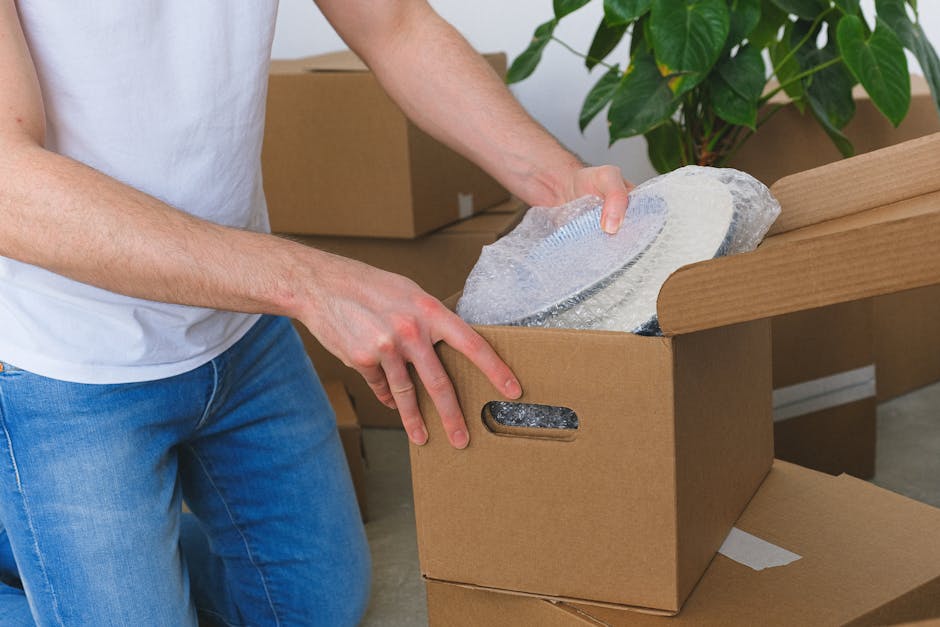
One item, one wrap. It is a simple rule, but people skip it all the time. Plates should be wrapped separately and packed vertically. Glasses should be wrapped by the bowl or body and cushioned around the rim. Ornaments and figurines need extra care around protruding parts, because that is where chips happen first.
4. Cushion the bottom of the box
Add a layer of paper, crumpled packing material, or soft padding at the base. This creates a shock-absorbing buffer for the first layer of items. Without it, the weight at the bottom gets transferred straight into the box base.
5. Pack heavier fragile items low and lighter ones above
For example, a box might start with wrapped mugs or plates at the bottom, then lighter bowls or small decor pieces above. Do not put heavy books with delicate glassware unless you really enjoy risk. Nobody does, of course, but it happens.
6. Fill voids properly
If there is any space between items, fill it. Loose space lets things shift. You should be able to gently shake the box without hearing movement inside. Not violently, obviously. Just a careful lift-and-test. If you hear rattling, add more padding.
7. Seal the top securely
Use strong tape across the centre seam and along the edges if needed. Boxes with fragile contents need a firm seal, especially if they are likely to be stacked or carried upstairs.
8. Label clearly on multiple sides
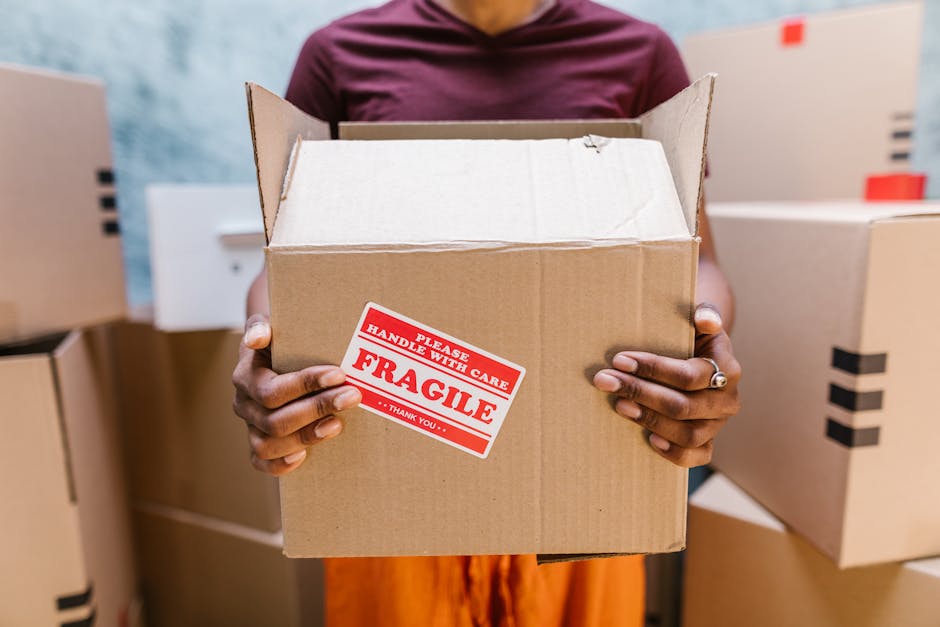
Write FRAGILE, the room, and a short contents note on at least two sides of the box. Add This Way Up where relevant, but do not rely on labels alone. The packing inside still needs to do the real work.
9. Keep essentials separate
Put the truly important items in a separate box or bag: medication, chargers, documents, keys, and one or two items you need the first night. That way, you are not rummaging through a mountain of boxes while looking for toothpaste and the kettle lead. It's a small mercy, honestly.
Expert Tips for Better Results
These are the details people often miss. Not the dramatic stuff. The little adjustments that quietly improve outcomes.
- Use smaller boxes for fragile weight: Heavy breakables packed into large boxes are awkward to lift and more likely to shift.
- Pack plates on edge: Stack them vertically with padding between pieces rather than flat, where pressure can build.
- Pad handles and corners: Kettle handles, vase necks, mirror corners, and lamp fittings are trouble spots.
- Double-box valuables if needed: For high-value or especially delicate items, a smaller inner box inside a larger cushioned box can add protection.
- Photograph complex items before dismantling: Useful for lamps, display pieces, and anything with wires or attachments.
- Keep similar materials together: Glass with glass, ceramics with ceramics. Mixing wildly different shapes can create pressure points.
- Mark priority boxes: If an item needs to be unpacked first or handled gently on arrival, say so.
One practical observation from moving day itself: people are often calmest when they know which boxes matter most. A tiny bit of foresight makes the loading sequence smoother, especially when the van is filling up fast and someone is trying to find the last roll of tape in a drawer they definitely packed already.
If you are moving larger or oddly shaped fragile furniture, it can help to pair careful packing with the right transport. A well-sized vehicle from man with van or a more dedicated load option can reduce unnecessary shifting. The less the box moves, the better.
Common Mistakes to Avoid
Most packing mistakes are not dramatic. They are small shortcuts that stack up. That is what makes them annoying.
- Using oversized boxes for delicate items: Bigger is not better if the contents can move around.
- Leaving empty gaps: A box with space inside is a box that allows impact.
- Overwrapping without cushioning: Wrapping alone is not enough if the item can still slam against the box wall.
- Packing mixed weights together: Heavy items crush lighter ones. Simple as that.
- Not reinforcing the base: Weak bottoms fail at the worst moment.
- Forgetting to label multiple sides: A label on top is easy to miss once boxes are stacked.
- Using old, worn tape: Tape that has lost its grip is false confidence in strip form.
- Rushing the kitchen: Kitchens are where people make the most mistakes because there are so many breakables and so many interruptions.
A lot of damage can be traced back to one phrase: "It'll be fine." Sometimes it is. Often it isn't. Better to spend a few extra minutes now than spend your first night in the new place sweeping up broken glass. No one wants that sort of welcome.
Tools, Resources and Recommendations
You do not need specialist equipment for every move, but the right basics make a real difference. Here is a sensible toolkit for fragile items:
| Item | Why it helps | Best use |
|---|---|---|
| Small sturdy boxes | Reduce shifting and make lifting safer | Glassware, ornaments, small electronics |
| Packing paper | Cushions items without excess bulk | Plates, mugs, decorative pieces |
| Bubble wrap or similar padding | Gives extra shock absorption | Artwork, mirrors, fragile corners |
| Cardboard dividers | Keep items separated | Glasses, bottles, delicate kitchen sets |
| Strong tape | Secures the box and reinforces seams | All boxes, especially heavier ones |
| Marker pens and labels | Makes handling and unpacking easier | Room labels, fragility notes, priority boxes |
It is also worth thinking about what not to use. Thin supermarket boxes, weak bin bags, or overstuffed laundry baskets are poor choices for breakables. They may seem convenient at the time, but convenience and protection are not the same thing.
If your move includes bulky or awkward household items alongside fragile goods, you may want to look at furniture pick up for separate pieces that do not need to ride inside fragile boxes. That can free up space and reduce clutter on moving day. For bigger home moves, some people also compare pricing and quotes early so they can decide whether to handle packing themselves or get more help.
Law, Compliance, Standards, or Best Practice
For most people, fragile packing is about best practice rather than formal legal compliance. Still, there are a few UK expectations worth keeping in mind.
First, removal work should be carried out with sensible care and safe handling. That means boxes should be packed in a way that does not create unnecessary lifting hazards, collapsed packaging, or loose sharp edges. Good packing supports safer lifting and loading, which matters for everyone involved. If you are booking a move, it is sensible to ask how the company approaches safety and item protection. Pages such as insurance and safety and health and safety policy can help you understand the standards a provider is aiming to follow.
Second, if you are moving items with obvious value, keep your own records. Photos, simple inventories, and clear labels are useful if anything needs to be checked after the move. That is not overcautious; it is just sensible. Moving day can blur into a blur, and memory is not always reliable when you are tired.
Third, if you are disposing of damaged packaging or unwanted household items, it is worth thinking about recycling where practical. If the move has generated a mountain of cardboard, bubble wrap, and old packaging materials, a more considered approach is better. You can read about the company's approach to recycling and sustainability if that matters to your move planning.
One final point: if terms, payments, or service scope are part of your decision, check those before moving day. It is just good housekeeping. Pages such as payment and security and terms and conditions exist for a reason, and reading them early saves awkward surprises later.
Options, Methods, or Comparison Table
There is more than one way to pack fragile items. The right choice depends on the item, your budget, and how much time you have. Here is a practical comparison.
| Method | Best for | Pros | Limitations |
|---|---|---|---|
| DIY packing with paper and tape | Small moves, budget-conscious movers | Cheap, flexible, easy to do at home | Takes time; relies on good technique |
| DIY packing with dividers and wrap | Kitchenware, glasses, ornaments | Better separation and cushioning | More material needed; slightly higher cost |
| Professional packing help | Busy households, high-value items, complex moves | Saves time, consistent method, less stress | Costs more than doing it yourself |
| Hybrid packing | Most family moves | Good balance of control and support | Requires planning to split tasks sensibly |
In our experience, the hybrid option is often the sweet spot. You pack the easier items yourself, and you leave the fiddly, fragile, or time-sensitive parts to the professionals. That way, you keep control without trying to do everything at once. Which, let's face it, is how packing mistakes begin.
Case Study or Real-World Example
Here is a realistic example. A couple moving from a two-bedroom flat in South London had a kitchen full of mixed glassware, a few sentimental ceramic pieces, and two framed prints they were particularly worried about. They were doing the move on a Friday afternoon, with rain starting around 4pm and a tight loading window. Nothing dramatic, just a very normal UK moving day trying its best to be annoying.
They spent an evening sorting the kitchen into categories: glasses, plates, serving bowls, ornaments, and "not fragile but awkward." The plates were wrapped and packed vertically in small boxes. Glasses went into dividers with extra paper around the stems. The prints were flat-packed between layers of card and soft padding, then marked clearly. A separate essentials box held kettle items, chargers, and a few basics for the first night.
On moving day, the boxes were easy to identify and load. Nothing rattled. Nothing had to be repacked in the doorway. The unpacking was still tiring, of course, but not chaotic. The fragile items came through intact, and the couple said the best part was simple: they could open boxes the next day without dread. That is a small thing, but on a move, small things matter quite a lot.
Practical Checklist
Use this checklist before the van arrives. Keep it nearby, ideally on your phone or printed on a piece of paper you will actually see.
- Sort fragile items by type and size
- Gather small sturdy boxes, wrap, tape, markers, and padding
- Check boxes for weakness, damp, or crushed corners
- Clean and dry items before wrapping
- Wrap each item individually
- Use cushioning at the bottom and around the sides
- Pack heavier items low and lighter items above
- Fill all empty spaces so items do not move
- Reinforce seams with strong tape
- Label boxes on multiple sides with contents and fragility notes
- Keep essentials separate from general household boxes
- Take photos of valuable or delicate items before transit
- Confirm how fragile boxes will be loaded into the vehicle
- Set aside recycling for packaging materials after unpacking
If you get through that list, you are in good shape. Not perfect maybe, but properly prepared. And that is usually what counts.
Get a free quote today and see how much you can save.
Conclusion
Fragile packing does not need to be stressful, complicated, or expensive. It needs to be thoughtful. That is really the heart of this smart packing guide for fragile items before UK removals: choose the right materials, keep items still, label clearly, and avoid the rushed shortcuts that lead to breakage.
If you are moving a home, a flat, or even a small office setup, careful packing can make the whole process calmer from start to finish. It protects the things you care about, helps the move run on time, and reduces the chance of that horrible moment when you open a box and wish you hadn't. Once you've done it properly, you feel the difference straight away.
Take your time, pack with a bit of care, and trust the process. A well-packed fragile box is a small win, but moving day is made of small wins.
Frequently Asked Questions
What is the best way to pack fragile items for a UK house move?
The best method is to wrap each item individually, use a small sturdy box, add cushioning on all sides, and fill any empty space so nothing moves during transit. Clear labelling helps too.
Should I use bubble wrap or packing paper for delicate items?
Both can work. Packing paper is ideal for wrapping glassware, crockery, and ornaments, while bubble wrap is useful for extra protection around corners, artwork, and more delicate pieces. Many people use both.
How do I pack glasses so they do not break?
Wrap each glass separately, add padding inside any hollow spaces, and place them upright in a divider box or a small box with plenty of cushioning. Do not let the rims touch each other.
Can I pack fragile items in large boxes?
You can, but it is usually not the best idea. Large boxes allow more movement and can become too heavy to lift safely. Smaller boxes are generally better for breakables.
How far in advance should I pack fragile items before moving day?
If possible, start a few days before the move and begin with items you will not need again. Kitchens, ornaments, and display pieces are often best packed early because they take longer than people expect.
What should I do with mirrors and framed pictures?
Wrap them carefully, protect the corners, and use flat packing or specialist picture boxes if you have them. Keep them labelled clearly and avoid placing heavy objects on top.
Is it worth paying for packing services for fragile items?
It can be, especially if you have a lot of breakables, little time, or valuable items. Professional help often reduces stress and saves time, particularly for bigger home or office moves.
How do I stop boxes from rattling during transport?
Fill all gaps with paper or cushioning material so the contents sit snugly. If you hear movement when you gently lift the box, add more padding before sealing it.
What is the biggest mistake people make when packing fragile items?
The most common mistake is leaving too much empty space inside the box. People also rush the process, use weak boxes, or mix heavy and delicate items together.
Should fragile boxes be marked on the outside?
Yes, definitely. Use clear labels on multiple sides and add notes like Fragile and This Way Up where needed. Labels are not a substitute for good packing, but they help a lot.
How do I pack fragile items if I am moving with a man and van service?
The same principles apply. Keep items secure, label boxes clearly, and make sure the driver or movers can identify delicate loads quickly. If you are arranging transport through man and van, neat packing helps the job go smoothly.
What should I do after the move with leftover packing materials?
Sort cardboard, paper, and reusable materials separately where possible. Keeping disposal and recycling in mind makes unpacking less messy and is generally the cleaner way to finish the move.